Abstract
The most comprehensive BOP monitoring report to date, covering 12 restoration sites across Upper and Lower New York Harbor, Jamaica Bay, and Western Long Island Sound. By the end of 2024, BOP had collected 2.8 million pounds of shells from restaurants, reintroduced over 150 million live oysters, and engaged over 20,000 NYC students.
Overview
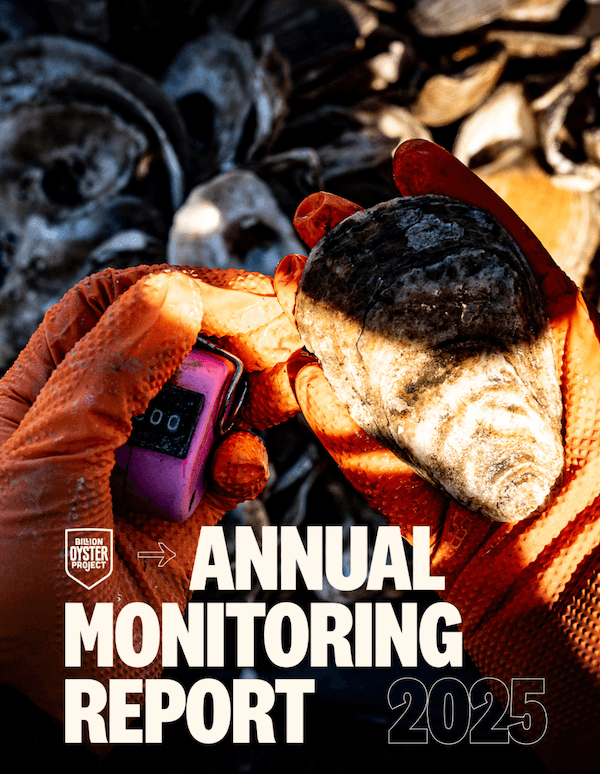
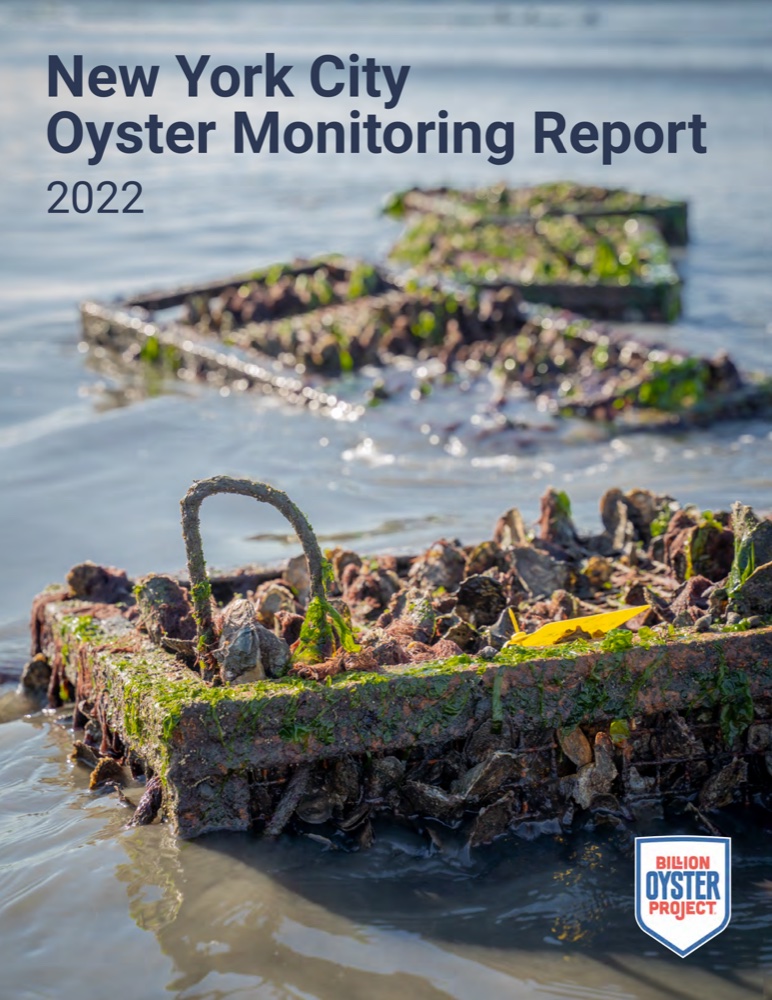
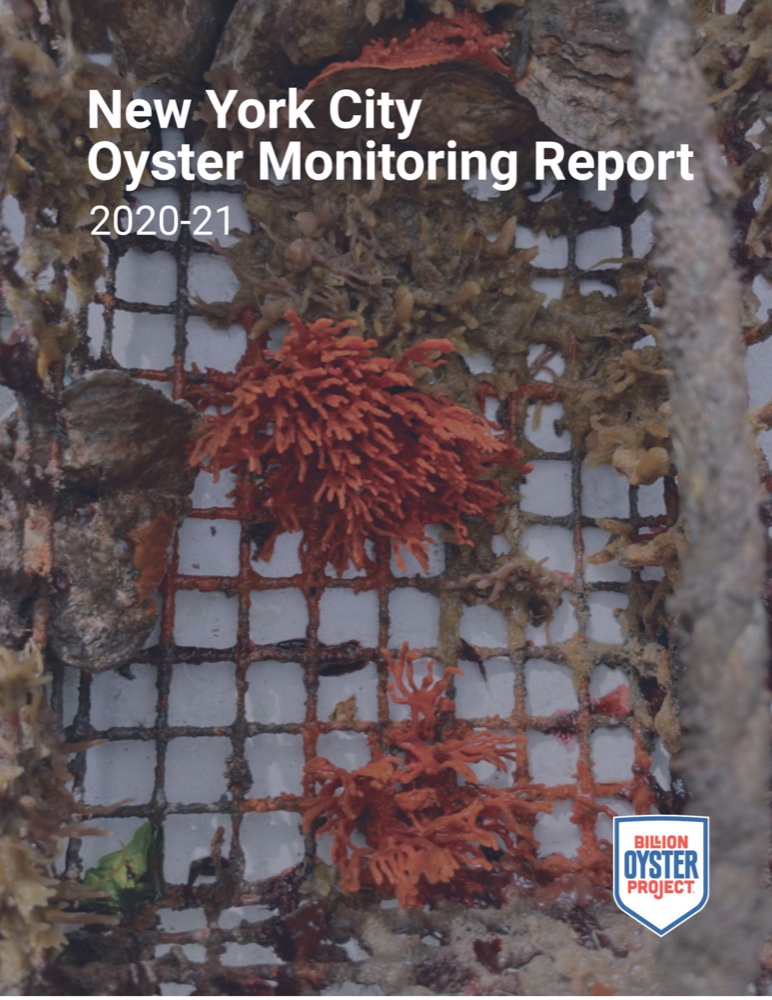
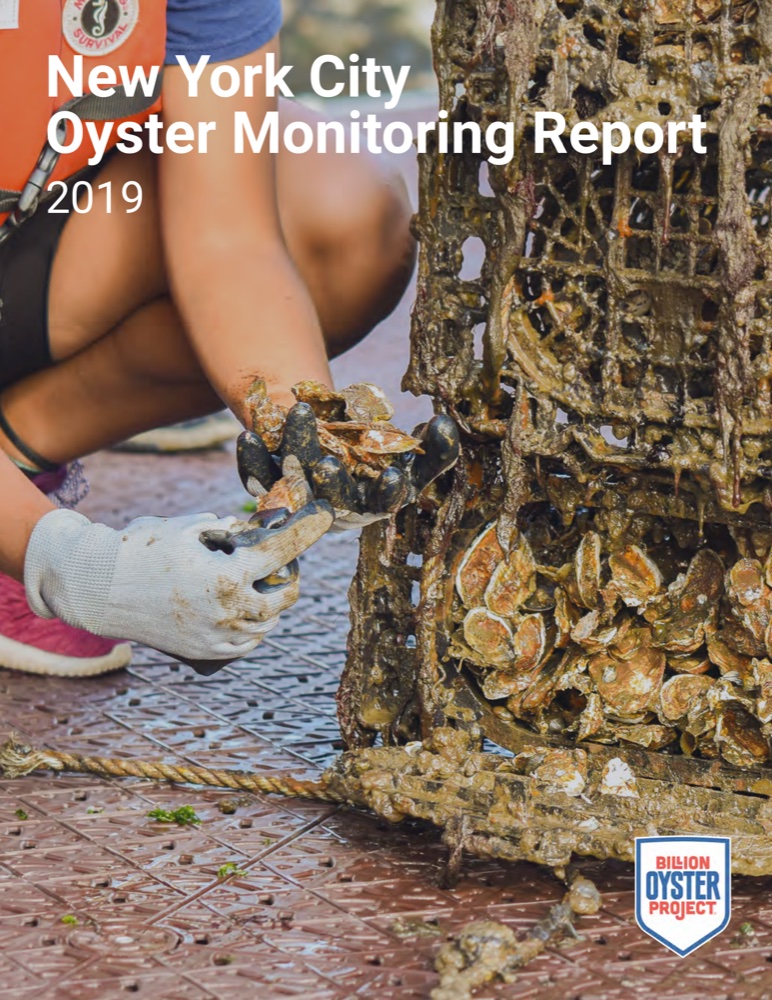
Billion Oyster Project's seventh annual monitoring report — a full-Harbor look at how restored oyster reefs are performing across twelve sites and five waterbodies: the Hudson River, Western Long Island Sound, Upper New York Harbor, Lower New York Harbor & Raritan Bay, and Jamaica Bay.
In 2025, the team counted and measured nearly 14,000 oysters, tracking survival, growth, and recruitment using protocols refined over nearly a decade of fieldwork. Long-running sites continue to hold strong — Brooklyn Bridge Park (~10.5M oysters), Head of Bay (~13.8M), and Soundview Park (5.3–9.1M) are sustaining large populations through multi-phase installation and periodic reseeding. Oysters at Bush Terminal Park, Paerdegat Basin, and Head of Bay have reached shell heights above 100 mm — proof the Harbor can grow mature, reproductively viable reefs.
2025 also produced the Harbor's first quantitative baseline for how mobile species use restored reefs — 580+ trap deployments documented 4,000+ fish, crabs, shrimp, and invertebrates across 44 taxa. That dataset matters well beyond oyster counts: it begins to answer the question that every urban restoration program eventually has to face, which is whether the habitat being built is actually being used by the ecosystem it's meant to support.
The report closes with BOP's strategic shift from pilot-scale experiments to landscape-scale restoration: retiring early test reefs and concentrating resources on multi-acre reefs capable of achieving self-sustaining population dynamics. That is a meaningful change in posture — a move from "prove it can work" to "build it at the scale required to matter," informed by a decade of site-specific data on what succeeds and what plateaus.
Published in 2025, this is the most complete portrait of the NYC oyster restoration program ever assembled. It reflects what a decade of monitoring across an expanding reef network makes possible — site-by-site longitudinal data, a harbor-wide mobile species baseline, and a strategic pivot grounded in evidence rather than ambition alone. Read alongside the earlier reports in the series, it closes out the first era of BOP's scientific work and opens the next.
Zhu, J., Gosnell, J.S., Sandrini, E., Khoury, C., Collinson, C., and McCann, M.J. New York City Oyster Monitoring Report: 2023-2024. Billion Oyster Project. New York, NY. 2025.